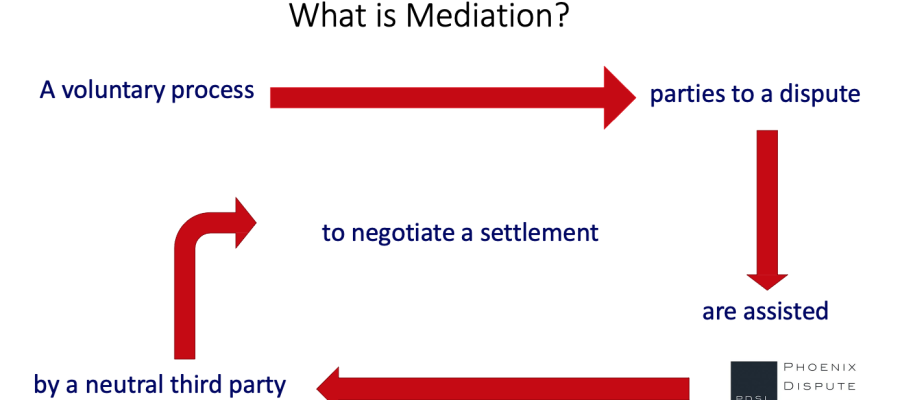
A mediator is a neutral third party who facilitates a conversation between two or more parties in a conflict. A mediator uses his or her skills to bring the parties to a settlement. However, the mediator does not decide what the settlement might be, which remains within the parties’ control. Unlike a judge, a mediator does not provide his or her opinion on the merits of the conflict.
Why should I become a mediator?
Mediation is currently the fastest growing form of alternative dispute resolution (ADR). According to the bureau of labor statistics, the profession is expected to grow by 8% within the next decade, which is much faster than the average. As mediation establishes itself at the heart of dispute resolution, it presents an opportunity for professionals to become part of a rapidly developing field at an early stage.
Mediation can be used as a method of alternative dispute resolution in most sectors including family, commercial, financial, workplace and community conflicts. A mediator is not required to be a lawyer, and can therefore belong to any of the above or other fields where conflicts have the potential to be mediated. This opens mediation up to professionals from numerous different walks of life.
While professional advancement is one of the key incentives for becoming a mediator, mediation also happens to be an extremely fulfilling role. Mediators get to facilitate the resolution of internecine conflicts by bringing parties together in the process or allowing them to move on and take their separate paths. For example, in a mediation concerning an inheritance dispute, a mediator can help estranged family members overcome years of acrimony and reconcile their differences by identifying what lies at the very heart of the conflict. Mediators working within a community setting can resolve tense communal conflicts that would otherwise threaten to spiral out of control. Even in a more mundane case, one which involves two neighbors in a tussle over a garden hedge for example, the mediator can restore peace and normalcy to the disputants’ lives whilst saving them huge emotional and financial costs from the escalation of the dispute.
Becoming a mediator also involves the development of transferable soft skills including communication techniques, diplomacy, emotional intelligence and negotiation strategies. These skills enhance one’s ability to deal with conflict and communication more effectively in a personal or professional setting, even if you are not engaged in a formal mediation process. This makes mediation particularly relevant for managers, administrators, counsellors and other roles focused on communication and people management.
What skills will I develop as a mediator?
As a mediator, you will learn how to facilitate a conversation between two disputing parties. In order to do this, you will perform the the role of an impartial third party. Accordingly, mediators and other ADR experts are often referred to as ‘neutrals’.
As a neutral, you will have to develop personal rapport and trust with the parties in a mediation. For the process to be successful, your impartiality must be above suspicion, and each party must see it this way. To do this, you will have to communicate effectively, demonstrate empathy and skillfully move the parties away from their entrenched positions. Moving parties away from their positions requires them to appreciate their underlying interests and needs, which are often reconcilable.
Thus, the mediator must be objective, impartial, an effective communicator, empathetic, patient, emotionally intelligent, adaptable, familiar with the psychology of conflict, able to distinguish interests and needs and also a great negotiator.